2026 World Falls Conference Abstract
Introduction: Falls and fragility fractures cost the NHS and Social Care an estimated £4bn each year and with an ageing population, these costs will continue to rise. The 2022 World falls guidelines advocate for proactive falls screening but implementation is challenging because (1) most people do not seek medical help after a non-injurious fall and (2) large-scale screening is both labour-intensive and costly. PROFFS offers a scalable digital solution by automating falls and fracture risk screening, enabling clinicians to prioritise and support those at highest risk.
Method: Adults aged ≥65yrs are being invited for screening, excluding those living in residential or nursing homes or receiving end-of-life care. PROFFS integrates medical record data with self-reported falls and fracture risk information, calculates individual risk using validated screening tools and produces a report identifying those at highest risk. A physiotherapist and pharmacist then deliver personalised and pharmaceutical interventions, with exercise classes provided in partnership with voluntary sector organisations.
Results: Data is being collected on the number and frequency of falls, as well as new diagnoses of osteoporosis and osteopenia. Intervention data includes deprescribing activity, hypotension reviews, initiation of bone-protective medication, referrals to osteoporosis services, exercise classes and community rehabilitation. At 12-month follow-up, outcomes will include repeat falls, injuries such as hip and other fragility fractures, A&E falls admissions and adherence to bone-protection therapy.
Conclusion: Falls prevention and management is a key BGS health-inequality priority within the CORE20 PLUS5. The PROFFS digital process offers a cost- and time-efficient method of identifying adults at highest risk enabling the delivery of tailored, multi-modal interventions and support by a multidisciplinary team.
With two years dedicated funding, PROFFS aims to demonstrate reductions in recurrent falls (≥2/year), fragility fractures, and increases in the uptake of strength and balance classes, as well as improved use of bone-protection medications.
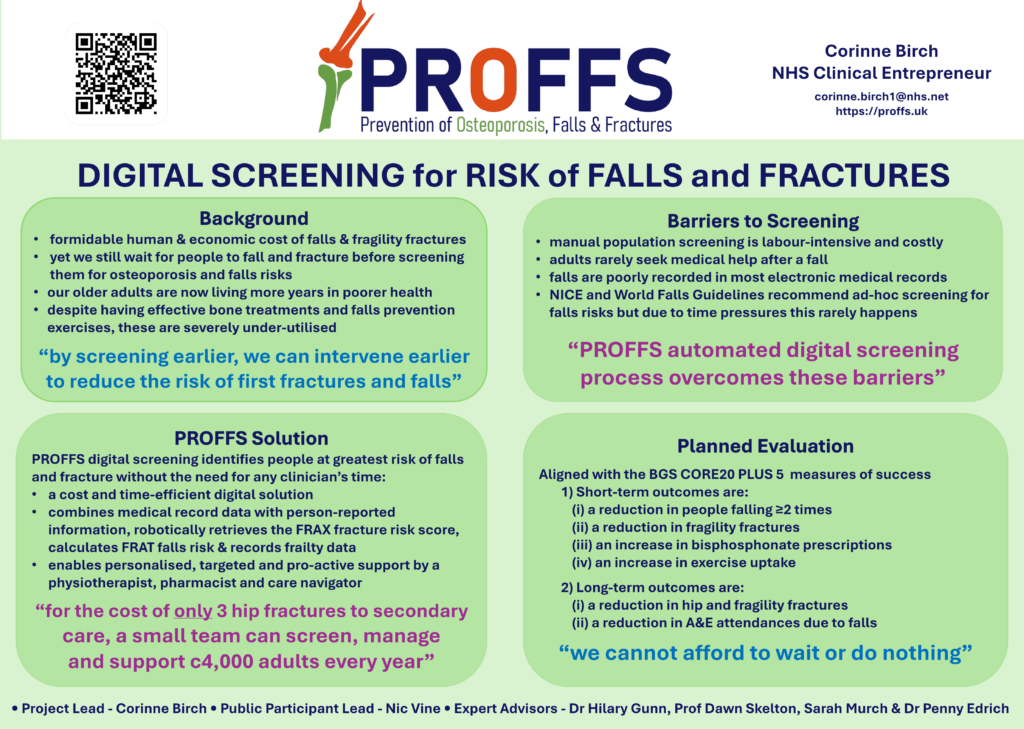
PROFFS POSTER Abstract ID 4324 World Falls Conference 2026 PDF Download